


Released in 2005, Rob Zombie’s The Devil’s Rejects stands as a defining work of mid-2000s American horror cinema. While its predecessor, House of 1000 Corpses (2003), was a neon-soaked, chaotic homage to vintage spookhouse camp and 1970s backwoods shockers, The Devil’s Rejects stripped away the theatrical artifice. In its place, Zombie delivered a sun-bleached, gritty road movie that plays more like a violent 1970s revisionist Western than a conventional slasher.

Plot and Narrative Shift
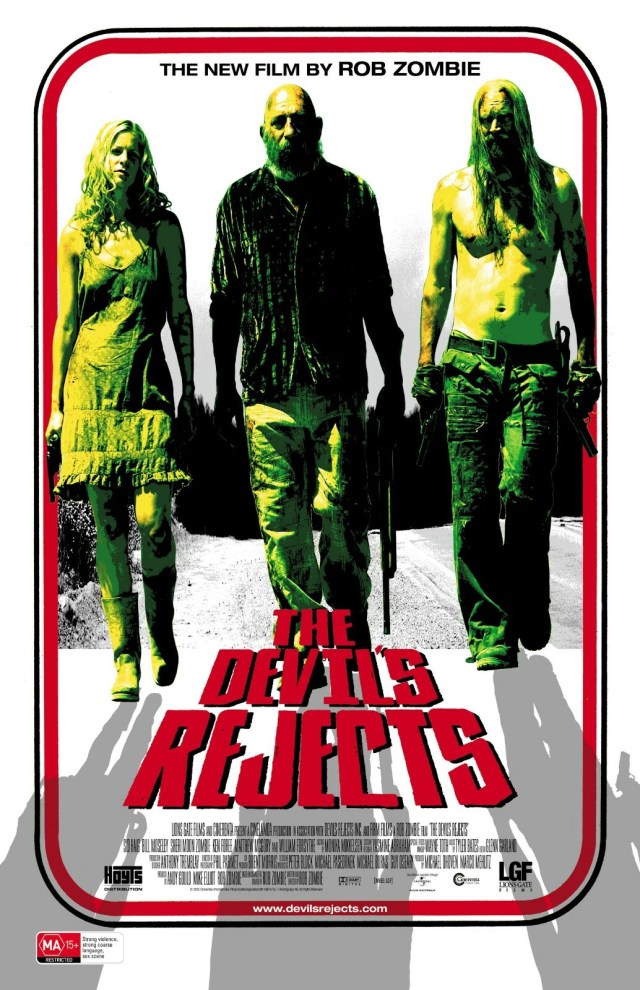
Set in 1978, the story picks up months after the events of House of 1000 Corpses. Texas Sheriff John Quincy Wydell (William Forsythe) leads a heavily armed raid on the Firefly family’s rural compound to avenge the brutal murder of his brother. While Mother Firefly (Leslie Easterbrook) is captured, siblings Otis Driftwood (Bill Moseley) and Baby Firefly (Sheri Moon Zombie) shoot their way out and escape.
Reuniting with their clown-makeup-clad patriarch, Captain Spaulding (Sid Haig), the trio takes their sadistic crime spree on the road. After violently terrorizing an innocent country-music troupe at the Kahiki Palms Motel, the fugitives lay low at a desert whorehouse run by Spaulding’s pimp brother, Charlie Altamont (Ken Foree). Meanwhile, Wydell’s obsessive quest for justice descends into religious zealotry. Abandoning the rule of law, Wydell enlists mercenary trackers known as the Unholy Two (Danny Trejo and Diamond Dallas Page) to bring divine vengeance upon the family.


Aesthetic and Style
Zombie departed radically from the music-video aesthetic of House of 1000 Corpses, utilizing specific filmmaking techniques to evoke the raw texture of 1970s New Hollywood:
- Grainy 16mm and Super 16mm stock: Cinematographer Phil Parmet utilized high-grain, blown-out film stocks to give the Texas landscapes a baking, bleached look reminiscent of Tobe Hooper’s The Texas Chain Saw Massacre (1974).
- Handheld camera movement: Jettisoning smooth tracking shots for documentary-style, shaky-cam framing grounded the horrific acts in a disquieting reality.
- Southern rock soundtrack: Rather than industrial metal, the film is scored with period-accurate 1970s Southern rock and folk, featuring artists like The Allman Brothers Band, Terry Reid, and Lynyrd Skynyrd. The juxtaposition of idyllic tracks like Reid’s “To Be Treated” against moments of unsparing violence created an eerie tonal contrast.


Thematic Inversion: Antiheroes vs. Zealotry
The central thematic hook of The Devil’s Rejects is moral disorientation. The Fireflys are indisputably depraved, sadomasochistic murderers. Yet by the film’s second act, Zombie shifts perspectives, forcing the audience to spend extensive time with them as a bizarrely loyal, functioning family unit.
When Sheriff Wydell finally captures the trio, he systematically strips off his badge, tortures them, burns down their hideout, and mimics their exact cruelty under the guise of holy retribution. By converting the lawman into an unhinged tormentor, the film challenges viewer sympathies.
This dynamic peaks in the iconic climax set to Lynyrd Skynyrd’s “Free Bird.” Battered, bloody, and outgunned, Otis, Baby, and Spaulding drive headlong into a heavily armed police blockade in their 1972 Cadillac Eldorado, weapons drawn. Zombie elevates three ruthless psychopaths into tragic, mythic outlaw figures, cementing an ambiguous critique of American violence, spectacle, and folklore.


Critical Reception and Legacy
Upon release, The Devil’s Rejects polarized mainstream critics due to its extreme brutality, but it earned passionate praise from genre purists and notable critics such as Roger Ebert, who awarded it three out of four stars, praising its commitment to tone, acting craft, and relentless execution.
The film remains widely regarded as Rob Zombie’s masterpiece. It cemented Captain Spaulding, Otis Driftwood, and Baby as modern horror icons, culminating years later in the final installment of the trilogy, 3 from Hell (2019).
To read the rest of my Monstrous Movie Reviews, click HERE! To add this movie to your film collection, click on the Blu-ray cover below.

