


Directed by Daniel DelPurgatorio and written by Andy Greskoviak, the 2025 sci-fi horror feature Marshmallow stands out as one of the year’s most inventive genre surprises. What initially presents itself as a nostalgic, campfire-lit homage to retro summer-camp slashers quickly morphs into an existential, emotionally resonant mystery that turns traditional horror tropes on their head.


A Clever Subversion of Nostalgic Horror
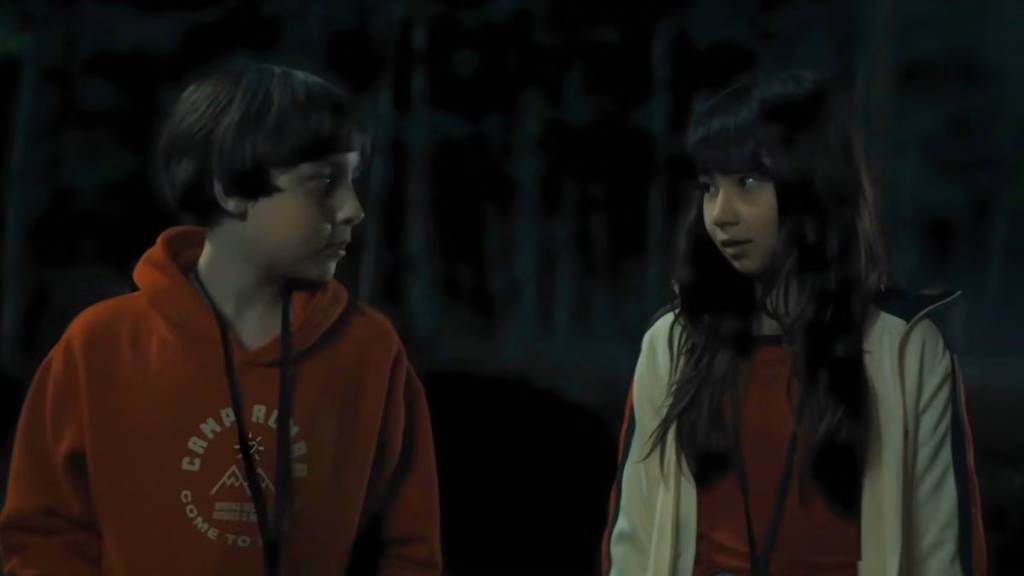
The film opens with a deceptively familiar premise: young Morgan (played with poignant vulnerability by Kue Lawrence), plagued by grief and recurring drowning nightmares, is shipped off to Camp Almar. When camp counselors share an unsettling urban legend around the fire about a sinister doctor who hunts children after lights out, the nightmare manifests into reality.
Where lesser films would settle into predictable stalk-and-slash choreography, Marshmallow uses that setup merely as a launchpad. Rather than leaning exclusively on jump scares, DelPurgatorio crafts an atmosphere thick with dread, isolation, and unease. The nighttime sequences capture the raw, vulnerable fear of childhood sleep-away lore—often dubbed a razor-sharp “Goosebumps for grown-ups” that knows exactly when to deliver blood, tension, and spectacle.

Grounded Performances and an Existential Core
The heart of Marshmallow belongs to its cast:
- Kue Lawrence (Morgan): Carries the emotional weight of the story effortlessly, portraying a grief-stricken, bullied outsider whose inner trauma mirrors the external horrors surrounding him.
- Kai Cech (Pilar): Brings warmth, sharp wit, and genuine chemistry as Morgan’s fellow camper and confidante.
- Strong Supporting Ensemble: Industry veterans like Corbin Bernsen, Giorgia Whigham, Paul Soter, and Alysia Reiner provide grounded credibility to Camp Almar’s mysterious authority figures.
The dynamic among the young cast ensures that the stakes feel deeply personal. As the kids scramble in the dark to evade their electrified-wand-wielding pursuer, the dread stems not just from survival instinct, but from their desperate reliance on one another.

A Jaw-Dropping Third Act
The true triumph of Marshmallow lies in its audacious narrative pivot. Without abandoning its horror roots, the film veers into haunting, high-concept science fiction.
When the truth behind the camp’s purpose unravels—revealing that the children are bio-engineered recreations destined to replace tragically deceased kids for grieving families—the film ascends from a well-crafted slasher to a tragic exploration of grief, artificial identity, and memory. The revelation that the rampant bullying and behavioral anomalies among the campers are early signs of flawed “programming” adds a chilling dystopian layer that lingers long after the credits roll.


A Modern Cult Classic
By blending the eerie comfort of classic campfire mythology with speculative psychological thriller elements, Marshmallow achieves the rare feat of keeping horror audiences genuinely guessing. It is bold, stylishly directed, and grounded in authentic emotional stakes—a sharp reminder of how thrilling genre filmmaking can be when creators dare to rewrite the rules.
To read the rest of my Monstrous Movie Reviews, click HERE! To stream this movie on Amazon, click HERE!