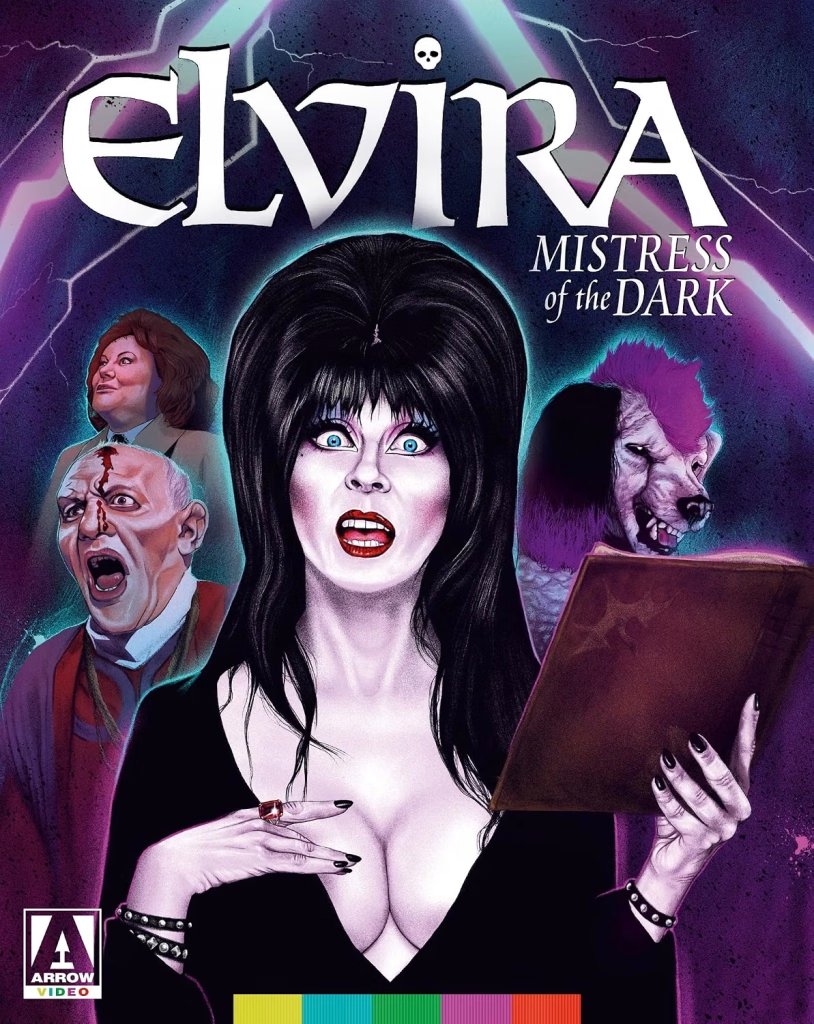
In 1988, late-night television’s favorite horror hostess packed her towering bouffant, plunge-cut gothic gown, and razor-sharp double entendres into a customized 1958 Thunderbird and drove headfirst onto the silver screen. Directed by James Signorelli (a veteran of Saturday Night Live commercial parodies) and co-written by star Cassandra Peterson alongside John Paragon, Elvira: Mistress of the Dark turned a low-budget syndication sensation into an enduring camp masterpiece.

The Setup: Goth Royalty Meets Puritans
The premise plays out like John Waters remaking Footloose inside a haunted house:
- The Dream: Elvira abruptly quits her seedy Los Angeles public-access gig after refusing the grotesque advances of her new boss. Her dream? Headline her own glamorous show in Las Vegas.
- The Snag: She needs $50,000 to buy into the casino circuit, cash she conveniently expects to inherit from her recently deceased great-aunt Morgana Talbot.
- The Culture Clash: The will requires her to travel to the fictional, hyper-conservative hamlet of Fallwell, Massachusetts (named with deliberate lack of subtlety after televangelist Jerry Falwell). Instead of cash, Morgana leaves her a crumbling Victorian manor, a magical recipe book, and an aloof poodle named Algonquin.
Fallwell’s morality police, led by the perpetually scandalized Chastity Pariah (Edie McClurg), immediately deem Elvira a public menace. Meanwhile, her sinister warlock uncle Vincent Talbot (William Morgan Sheppard) schemes to steal the spellbook to unleash hell on earth.

Why the Film Works: Camp, Wit, and Groundlings Timing
What could have easily collapsed under the weight of a flimsy ninety-minute sketch instead crackles with relentless comedic energy.
- Weaponized Double Entendres: Peterson’s Groundlings background shines through every line delivery. The jokes aren’t subtle—puns about her cleavage, casseroles that turn into carnivorous monsters, and gas-station flirtations fly at a rapid-fire clip—yet they are delivered with such self-aware, Valley-girl-meets-Morticia charm that they disarm cynicism.
- A Punk-Rock Underdog Narrative: Elvira isn’t the butt of the joke; the repressed, hypocritical town elders are. The local teenagers quickly embrace her after she shows them how to loosen up, revamp their wardrobe, and embrace weirdness. Long before modern “be yourself” messaging became standard studio fare, Elvira made nonconformity look utterly glamorous.
- Practical FX and Mayhem: From a demonized pot roast bursting out of an oven to a climactic sorcerer showdown fueled by lightning and tassel-twirling, the film leans whole-heartedly into goofy 1980s creature effects and theatrical absurdity.

The Cult Legacy
At the box office in the fall of 1988, the movie had a modest showing—hampered in part by the financial collapse of its distributor, New World Pictures, which pulled prints from theaters just as word-of-mouth was building.
Yet, home video, cable syndication, and annual Halloween viewings turned the film into an indelible pop-culture touchstone. Peterson proved that Elvira was not merely a TV framing device or a billboard gimmick, but a fully realized comic creation who could carry a feature film entirely on her own sky-high shoulders.
To read the rest of my Monstrous Movie Reviews, click HERE! To add this movie to your film collection, click on the Blu-ray cover below.