

Released in the summer of 2013, James Wan’s The Conjuring revitalized the supernatural haunted-house subgenre at a time when studio horror was saturated with found-footage gimmicks and graphic torture porn. Made on a modest $20 million production budget, the film grossed over $319 million worldwide, earned rare critical acclaim for mainstream horror, and laid the foundation for the most commercially successful horror franchise in cinematic history.

Premise and Narrative Arc
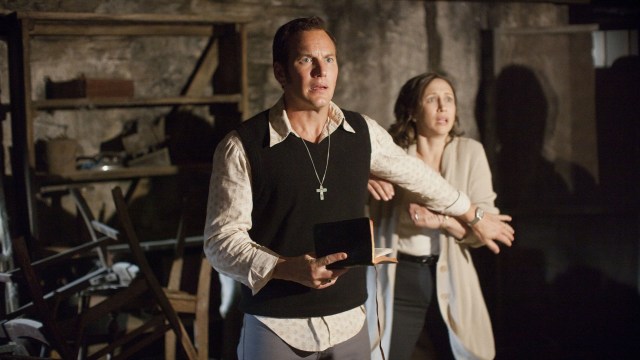
Set in 1971, the film dramatizes an alleged case investigated by real-life self-proclaimed demonologists Ed and Lorraine Warren (Patrick Wilson and Vera Farmiga). Roger and Carolyn Perron (Ron Livingston and Lili Taylor) move into a dilapidated 18th-century farmhouse in Harrisville, Rhode Island, alongside their five daughters.
The haunting escalates methodically:
- Infestation: Unexplained cold spots, rotting smells, clocks consistently stopping at 3:07 AM, and mysterious bruising appearing on Carolyn.
- Oppression: Physical assaults targeting the children, culminating in the film’s iconic “hide-and-clap” basement sequence.
- Possession: Ed and Lorraine Warren conduct an investigation using audio-visual recording equipment and thermal sensors, identifying the malevolent entity as Bathsheba Sherman—a 19th-century woman accused of witchcraft who sacrificed her child and cursed anyone who seized her land.
- The Climax: Because waiting for Vatican approval for an official exorcism would arrive too late, Ed Warren performs an unauthorized, improvised exorcism in the basement as Bathsheba attempts to force Carolyn to murder her own children.

Directorial Craft: Tension Over Shock
Director James Wan—previously known for Saw (2004) and Insidious (2010)—crafted The Conjuring as an homage to the slow-burn, atmospheric dread of 1970s horror classics like The Exorcist (1973), The Changeling (1980), and The Haunting (1963).
| Cinematic Element | Execution in The Conjuring |
|---|---|
| Pacing & Framing | Long, unbroken Steadicam tracking shots that map the house’s architecture, allowing audiences to subconsciously track open doorways, dark corners, and negative space. |
| Sound Design | Heavy reliance on silence, floorboard creaks, and sudden acoustics (e.g., clapping hands, music boxes) rather than synthetic jump-scare orchestral stings. |
| Practical Effects | Physical rigs, wires, and practical makeup for physical phenomena and possession scenes, minimizing CGI to ground the terror in tactile reality. |
| Characterization | Treating the Warrens as a grounded, devout, and deeply affectionate couple anchored by Wilson and Farmiga’s chemistry, giving emotional stakes to the supernatural combat. |
The Motion Picture Association famously awarded the film an R rating without requiring cuts for blood, gore, nudity, or profanity; raters simply determined the film was “too intensely scary” for a PG-13 rating.

Fact vs. Fiction: The Harrisville Case
The screenplay by Chad and Carey Hayes drew directly from Ed and Lorraine Warren’s case files, as well as memoirs written by the eldest Perron daughter, Andrea Perron (House of Darkness House of Light).
While the Perron family confirmed living through a decade of terrifying experiences in the farmhouse, historical and skeptical analyses reveal marked departures:
- Bathsheba Sherman: Local historical records show Bathsheba died of natural causes (specifically a stroke) in 1885 and was buried in a Baptist cemetery, with no evidence corroborating accusations of witchcraft or infant sacrifice.
- The Exorcism: Lorraine Warren and the Perrons acknowledged that an unofficial ritual did take place in 1974, but it went catastrophically wrong. Roger Perron allegedly struck Ed Warren and threw the couple out of the house; the Perrons remained in the home until 1980 because they could not afford to move.
Box Office Impact and The Conjuring Universe
The Conjuring became an unexpected juggernaut, out-earning established summer tentpoles and establishing Warner Bros. and New Line Cinema’s premier horror universe. The film introduced key artifacts and concepts that spawned a sprawling cinematic universe, including:
- Direct sequels focusing on high-profile Warren cases (The Enfield Poltergeist in 2016, Arne Cheyenne Johnson in 2021).
- The Annabelle spin-off trilogy (2014, 2017, 2019), inspired by the opening prologue featuring the haunted doll kept in the Warrens’ occult museum.
- The Nun franchise (2018, 2023) and The Curse of La Llorona (2019).
By treating haunted house conventions with technical discipline, period-accurate craftsmanship, and sincere dramatic weight, The Conjuring remains one of the defining touchstones of modern horror cinema.
To read the rest of my Monstrous Movie Reviews, click HERE! To add this movie to your film collection, click on the Blu-ray cover below.
