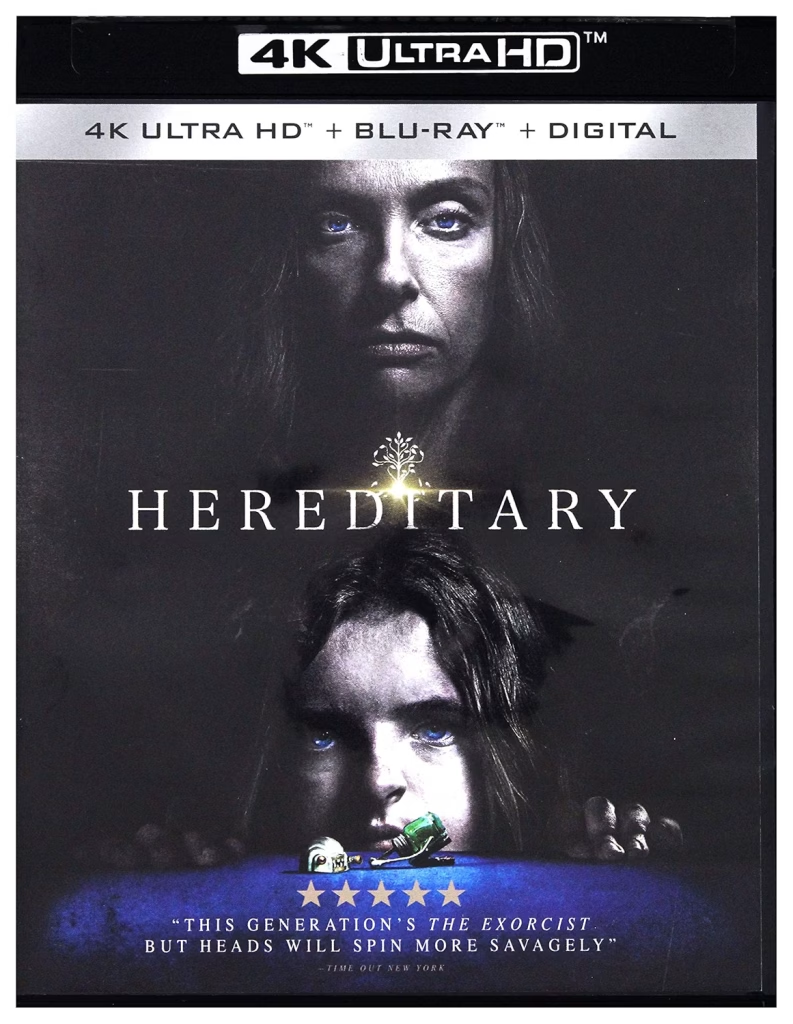
Ari Aster’s 2018 feature debut, Hereditary, fundamentally redefined modern supernatural horror by disguising an inescapable Greek tragedy inside an intimate family drama. Rather than relying on cheap jump scares, Aster anchors the terror in the devastating, suffocating reality of generational trauma, guilt, and the loss of autonomy.

The Anatomy of Grief and Control
The narrative centers on Annie Graham (played in a career-defining performance by Toni Collette), a miniature artist struggling with the death of her secretive, estranged mother, Ellen. Annie lives with her reserved husband Steve (Gabriel Byrne), troubled teen son Peter (Alex Wolff), and enigmatic 13-year-old daughter Charlie (Milly Shapiro).
Aster’s visual motif of Annie constructing dioramas serves as the film’s central thematic thesis: the illusion of agency.
- The Dollhouse Framing: Cinematographer Pawel Pogorzelski frequently frames the Graham home with wide, flat angles that mirror Annie’s miniature models. The opening shot transitions seamlessly from a miniature bedroom to Peter’s real room, establishing that the characters are merely figures being manipulated inside an unseen puppet master’s box.
- The Inevitability of Fate: In Peter’s high school English class, a discussion of Sophocles’ The Women of Trachis directly spells out the horror: is it more tragic to be doomed by your own flaws, or by an inevitable fate you cannot alter? For the Graham family, the answer is the latter.

The Inciting Catastrophe
The pivotal turning point—Charlie’s shocking, decapitating car accident after eating walnuts at a party—shatters the illusion that Hereditary is a conventional haunted house movie. The horror of the aftermath does not cut away; the camera lingers on Peter’s paralyzed state of shock in his bed while the morning sun slowly reveals the horrific roadside truth to Annie.
What follows is an unrelenting exploration of familial resentment, peaking during a dinner table confrontation between Annie and Peter that captures the terrifying emotional violence families can inflict on one another.

Occult Conspiracy and the Descent
The psychological descent gives way to demonic dread through Annie’s friendship with Joan (Ann Dowd), a fellow grieving mother who introduces her to séances. Aster subverts expectations by revealing that this is not an accident of paranormal vulnerability, but the calculated culmination of Ellen’s lifelong devotion to King Paimon, one of the eight kings of Goetia who demands a male host.
By the climactic third act, Aster unleashes visceral nightmare imagery:
- Self-mutilation and levitation driven by demonic possession.
- Annie’s manic, crawling chase sequence across the ceiling.
- Peter’s jump from the attic window, delivering him into the treehouse where naked cult members crown him as Paimon incarnate.
Hereditary stands as a landmark in 21st-century cinema because it understands that monsters and demons are only terrifying when they reflect the real-world horrors we already fear most: inheriting our parents’ sicknesses, hurting the people we love, and realizing we are not in control of our own lives.
To read the rest of my Monstrous Movie Reviews, click HERE! To add this movie to your film collection, click on the Blu-ray cover below.