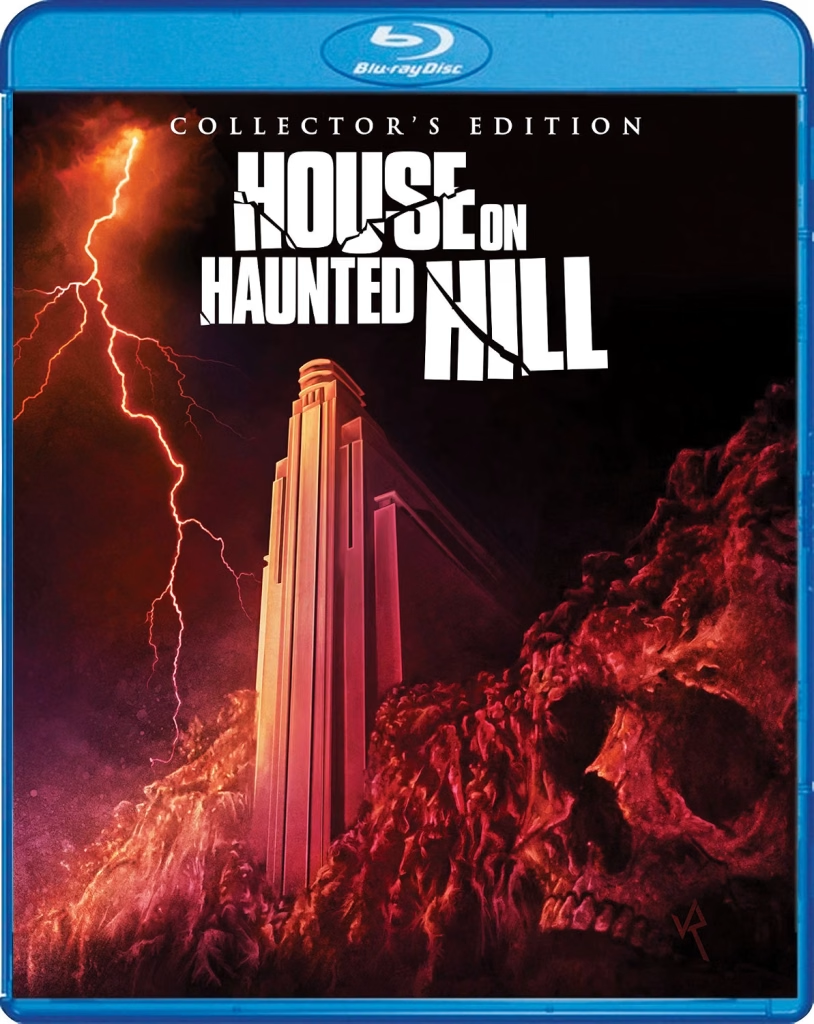
Released during the tail-end of the 1990s teen-horror boom, House on Haunted Hill (1999) stands as a loud, stylistic, and polarizing entry into the supernatural subgenre. Directed by William Malone, the film is a remake of legendary gimmick-master William Castle’s 1959 black-and-white classic starring Vincent Price.
While the original leaned heavily into camp and atmospheric fun, the 1999 iteration supercharges the premise with industrial-goth aesthetics, bodily mutilation, high-concept set design, and a heavily committed ensemble cast.

1. Plot Overview: A Million Dollars to Survive
The story centers on eccentric, wealthy amusement park mogul Steven Price (Geoffrey Rush) and his bitterly estranged, socialite wife Evelyn (Famke Janssen). For Evelyn’s birthday, Steven rents out the Vannacutt Psychiatric Institute for the Criminally Insane—a sprawling, art-deco-inspired house of horrors with a history stained by sadistic medical experiments and a brutal 1931 staff massacre led by the deranged Dr. Richard Vannacutt.
Price invites five strangers to the asylum under false pretenses, offering $1 million each to anyone who can survive a locked-in night inside:
- Eddie Baker (Taye Diggs) – A former professional baseball player.
- Sara Wolfe (Ali Larter) – A young woman secretly posing for her ex-boss.
- Melissa Marr (Bridgette Wilson) – A jaded television personality.
- Dr. Donald Blackburn (Peter Gallagher) – A duplicitous plastic surgeon.
- Watson Pritchett (Chris Kattan) – The jittery, hyperactive owner of the building.
Once the heavy security doors lock automatically, cutting off communication with the outside world, the night spirals out of control. The guests realize that Steven and Evelyn are attempting to murder each other, but more importantly, the house itself is alive, driven by a malevolent, shape-shifting supernatural entity that treats them all as prey.

2. Cast and Performances
Much of the film’s enduring cult status stems from its eccentric, high-energy cast, who lean heavily into the material’s campy sensibilities:
- Geoffrey Rush as Steven Price: Sporting a thin pencil mustache reminiscent of director John Waters (and serving as a direct tip-of-the-hat to Vincent Price), Rush plays Steven as a manic, showman-like conman who relishes the terror unfolding around him.
- Famke Janssen as Evelyn Price: Janssen brings biting, ice-cold venom and undeniable screen presence as a woman matching her husband’s cruelty beat-for-beat.
- The Supporting Lineup: While the characters are largely archetypes, actors like Taye Diggs, Ali Larter, and Peter Gallagher keep the narrative grounded with survival instincts and genuine charm. Meanwhile, Saturday Night Live alum Chris Kattan provides divisive, hyper-strung comic relief as Pritchett.cinematic randomness
- Jeffrey Combs as Dr. Vannacutt: Though primarily seen through grainy, nightmarish flashback footage, horror icon Jeffrey Combs leaves a lasting mark as the terrifying, razor-wielding asylum doctor.

3. Production Design, Style, and Gimmicks
Director William Malone, heavily influenced by avant-garde horror and music video aesthetics, gave House on Haunted Hill a distinct visual identity that separated it from standard late-90s slasher flicks.
- The Set Architecture: The Vannacutt house is a masterpiece of threatening architecture. Combining gothic decay with harsh, sharp-angled Art Deco lines, the interior features shifting walls, subterranean chambers, and disorienting hallways.
- The Visual Effects: The film utilizes a mix of practical creature makeup, blood-soaked practical stunts, and early digital CGI. The signature “ghost effect”—where spirits blur and shudder across the frame at hyper-speed (reminiscent of Jacob’s Ladder)—helped create an atmosphere of visceral panic.
- The Theatrical Gimmick: Nodding to original producer William Castle (who famously wired theater seats with buzzers or used pulley skeletons during the 1959 release), Warner Bros. distributed promotional scratch-off cards to cinema-goers, giving audiences a chance to win a cash prize just like the characters on screen.

4. Reception and Legacy
Upon its release over Halloween weekend in 1999, House on Haunted Hill was a box-office success, opening at number one in the United States and grossing over $65 million worldwide against a modest budget.
Critical reception at the time, however, was largely negative. Reviewers criticized its heavy reliance on CGI, rapid-fire editing style, and predictable jump scares. Over time, however, the film has undergone a critical reassessment. Horror fans and retrospective reviewers frequently champion it as a fun, highly atmospheric, and genuinely creepy time-capsule of turn-of-the-millennium studio horror.
Backed by a pulsing industrial-rock soundtrack (featuring Marilyn Manson’s eerie cover of “Sweet Dreams”), House on Haunted Hill remains a wildly entertaining piece of popcorn horror that treats its haunted asylum setting like a living, breathing slaughterhouse.
To read the rest of my Monstrous Movie Reviews, click HERE! To add this movie to your film collection, click on the Blu-ray cover below.