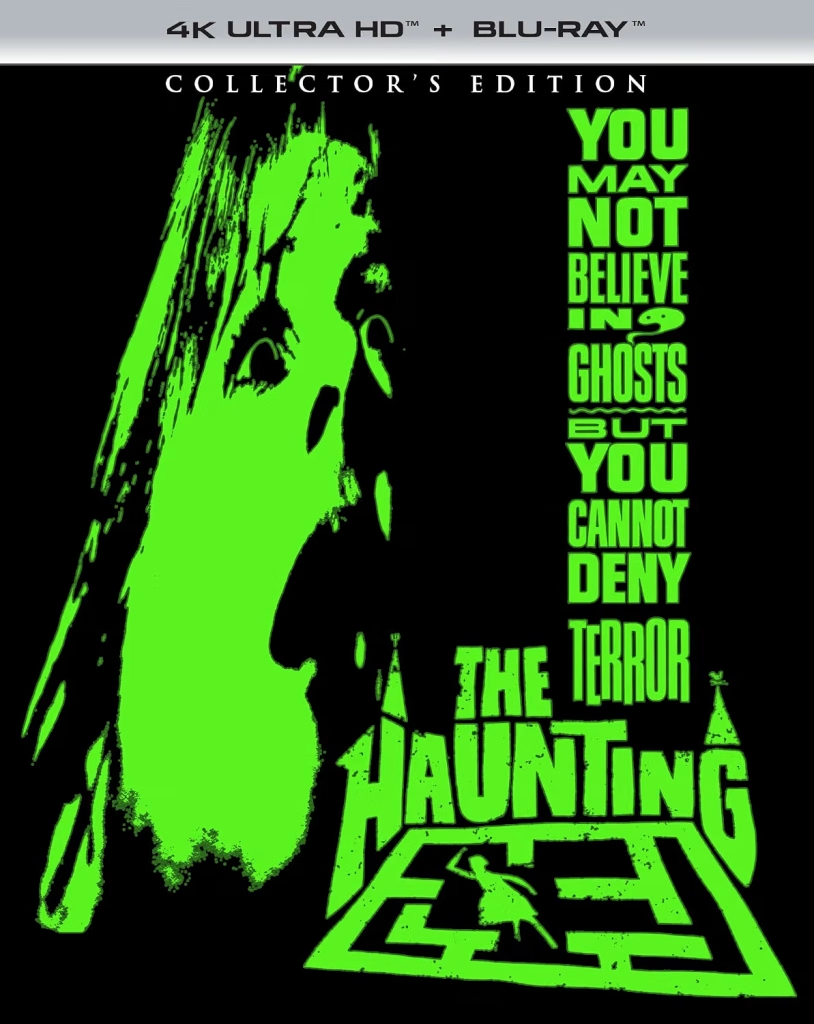
Released in September 1963, The Haunting—directed and produced by Robert Wise—stands as a towering achievement in the horror genre. Eschewing the bloody special effects and explicit monster reveals that would later dominate cinema, Wise crafted a chilling, atmospheric masterpiece based on Shirley Jackson’s seminal 1959 novel, The Haunting of Hill House.
Rather than relying on cheap jump scares, the film utilizes sound, shadow, cinematic framing, and deep psychological ambiguity to terrify audiences, leaving them to wonder whether Hill House is truly alive or if its visitors are simply slipping into madness.

1. Plot Overview
The story centers on Dr. John Markway (Richard Johnson), an anthropologist and paranormal investigator who wants to scientifically document supernatural activity. He rents Hill House—a brooding, architecturally unsettling mansion in Massachusetts with a tragic, blood-soaked history built by a man named Hugh Crain.
Markway recruits three people with unique histories to join him for a summer study:
- Eleanor Lance (Julie Harris): A fragile, deeply repressed spinster who spent years nursing her domineering invalid mother. After her mother’s death, she is treated as a burden by her sister’s family. Eleanor experienced a poltergeist event in her youth and feels an immediate, dangerous kinship with Hill House.
- Theodora (“Theo”) (Claire Bloom): A sharp, sophisticated, and free-spirited artist with confirmed extrasensory perception (ESP).
- Luke Sanderson (Russ Tamblyn): A cynical young man who stands to inherit the mansion and views the expedition with a mocking detachment.
As the group spends nights in the cavernous house, they are subjected to escalating psychological and supernatural torment—pounding on the walls, freezing cold spots, phantom footsteps, and nightmarish writing scrawled on the corridors. As Eleanor’s mental state frays, she becomes convinced that the house wants her to stay forever.

2. Key Themes
- The Thin Line Between Supernatural and Psychological: The film brilliantly blurs the distinction of whether Hill House is a malicious, sentient entity or if the terrors are externalized manifestations of Eleanor’s severe guilt, repression, and longing for a home.
- Repression and Identity: Eleanor represents the tragic archetype of the overlooked woman. Her identity is completely suppressed until she enters Hill House, where she paradoxically finds “belonging” in a place that eventually destroys her.
- Queer Subtext: In a notable departure for Hollywood cinema in 1963, the character of Theodora is explicitly coded as a lesbian (based closely on Jackson’s novel), marking one of the earliest mainstream depictions of a prominent non-heterosexual character navigating a horror narrative.

3. Direction and Cinematic Style
Director Robert Wise came from a rich background in horror, having learned the trade under legendary producer Val Lewton (Cat People, The Body Snatcher). He applied Lewton’s philosophy—that what you cannot see is far scarier than what you do see—to every frame of The Haunting.
- The Architecture of Fear: The interior sets, designed by Elliot Scott, avoided right angles. Walls leaned slightly outward, and doors were engineered to close on their own, subtly disorienting the viewer and mimicking a sickening vertigo.
- Widescreen Cinematography: Shot in black-and-white Panavision by cinematographer Davis Boulton, the camera uses deep focus, swirling tracking shots, and extreme angles to isolate the characters in massive, oppressive rooms. Your eyes are forced to scan the margins of the screen, constantly looking into the shadows for hidden threats.
- Sound Design: The movie relies heavily on acoustic dread. The terrifying, rhythmic thud-thud-thud of something heavy pounding against the walls outside the bedroom doors remains one of the most effective audio cues in horror history.

4. Legacy and Cultural Impact
While The Haunting was only a modest box office success upon its initial release, it has since been recognized as a landmark achievement in cinema.
- Critically Acclaimed: Filmmakers like Martin Scorsese have frequently cited The Haunting as one of the scariest horror films ever made, praising its ability to evoke pure dread without relying on gore or special effects.
- The Remake: In 1999, Jan de Bont directed a high-budget remake starring Liam Neeson and Lili Taylor. Unlike the subtle, psychological mastery of the 1963 original, the remake leaned heavily on loud computer-generated imagery, demonstrating why Robert Wise’s restraint worked so effectively.
- Modern Influence: Shows like Netflix’s The Haunting of Hill House (2018) drew structural and thematic inspiration from both Jackson’s novel and nods to Wise’s cinematic visual language.
“Hill House, not sane, stood against its hills, holding darkness within; it had stood for eighty years and might stand for eighty more.” — Opening Narration
To read the rest of my Monstrous Movie Reviews, click HERE! To add this movie to your film collection, click on the Blu-ray cover below.