

The history of horror comics is a rollercoaster ride of gruesome innovation, moral panic, and resilient rebirth. From the pre-code “Golden Age” of gore to the sophisticated psychological terrors of the modern era, the genre has always mirrored the anxieties of its time.
1. The Pre-Code Era: The Birth of Ghastly (1940s–1954)
While early comics occasionally dabbled in the supernatural (like The Spectre or Ghost Comics), the genre truly exploded after World War II. As superhero popularity waned, publishers looked for grittier subjects.
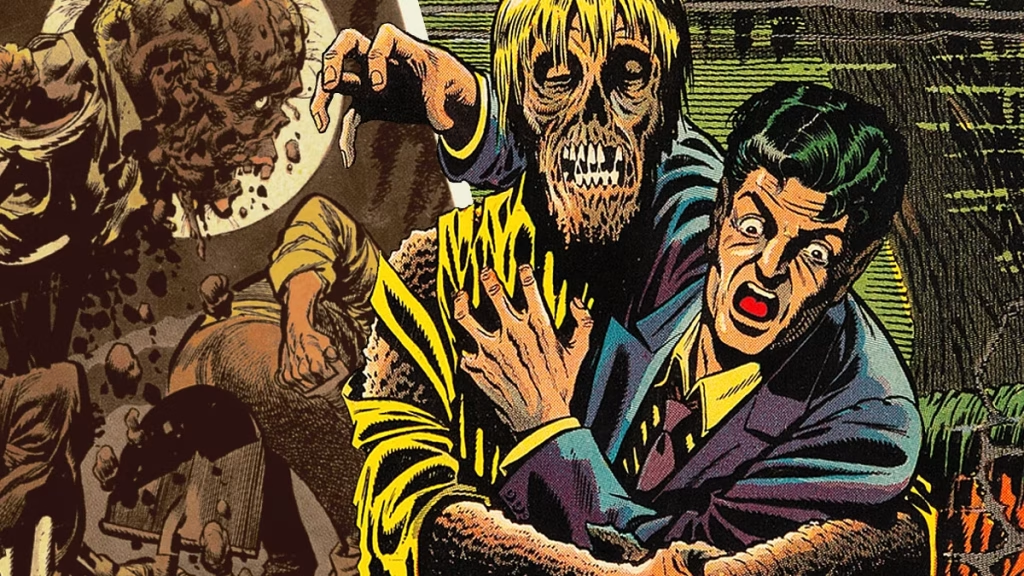
- The EC Revolution: In 1950, William Gaines and Al Feldstein of EC Comics launched Tales from the Crypt, The Vault of Horror, and The Haunt of Fear. These weren’t just scary; they were morality plays featuring “twisted endings” and shockingly detailed art by legends like Jack Davis and Graham Ingels.
- The “Gore” Boom: Competitors like Harvey and Standard soon followed, flooding newsstands with hundreds of titles. This era was defined by “The Host” (like the Crypt-Keeper)—a narrator who mocked the reader and the doomed protagonists alike.

2. The Great Crackdown: Seduction of the Innocent (1954)
By the mid-50s, the graphic nature of horror comics drew the ire of moral crusaders.
- Fredric Wertham: The psychiatrist published Seduction of the Innocent, arguing that horror comics contributed to juvenile delinquency.
- The Senate Subcommittee: Congressional hearings led to the creation of the Comics Code Authority (CCA).
- The Ban: The CCA effectively banned words like “horror” and “terror” from titles and prohibited depictions of gore, vampires, werewolves, and ghouls. This decimated the genre, forcing EC Comics to pivot to Mad magazine to survive.


3. The Silver Age Loophole: Magazines and “The New Weird” (1960s)
Since the CCA only governed “comic books,” publishers found a loophole: black-and-white magazines.
- Warren Publishing: In 1964, Jim Warren launched Creepy and Eerie. Because they were magazines, they bypassed the CCA, allowing horror to return with sophisticated, cinematic storytelling and lush gray-wash art.
- Vampirella: Introduced in 1969, she blended sci-fi, horror, and erotica, proving that horror could be both campy and commercial.
4. The Bronze Age: The Code Loosens (1970s)

In 1971, the CCA relaxed its rules, allowing “classic” monsters to return if handled in a “literary” fashion.
- Marvel’s Monster Mash: Marvel launched The Tomb of Dracula, Werewolf by Night, and Ghost Rider. Dracula, in particular, became a flagship title, blending Gothic horror with the Marvel Universe.
- DC’s Gothic Mystery: DC leaned into anthology-style mystery with House of Secrets and House of Mystery, notably introducing Swamp Thing in 1971, a character that would eventually change horror forever.
5. The Modern Age: Sophistication and Splatter (1980s–1990s)

Horror comics shifted from “shock of the week” to deep, psychological narratives.
- Alan Moore and the British Invasion: Moore’s 1983 run on Saga of the Swamp Thing deconstructed the character, introducing existential horror and John Constantine. This paved the way for DC’s Vertigo imprint.
- Vertigo and Neil Gaiman: The Sandman and Hellblazer treated horror as dark fantasy and social commentary, attracting a more mature, literary audience.
- Indie Horror: Dark Horse Comics began publishing Hellboy by Mike Mignola, blending folklore, pulp, and Lovecraftian dread.
6. The 21st Century: The Golden Age of Indie Horror

Today, horror comics are more diverse and popular than ever, often serving as the primary source material for Hollywood.
- The Walking Dead (2003): Robert Kirkman’s epic changed the landscape, proving that a black-and-white indie horror comic could become a global pop-culture phenomenon.
- Body Horror and Folk Horror: Modern creators like Junji Ito (the master of Japanese body horror) and James Tynion IV (The Nice House on the Lake) have pushed the genre into surreal, high-concept territories.
- Major Modern Hits:
- Locke & Key (Joe Hill)
- Wytches (Scott Snyder)
- Something is Killing the Children (James Tynion IV)
To read my other OFF THE RACK COMICS blogs, click HERE!