
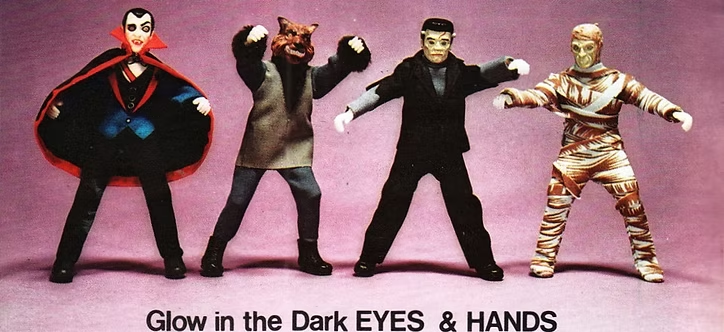
In the mid-1970s, the Mego Corporation was the undisputed king of the toy aisle. While they were world-famous for their World’s Greatest Super Heroes line, they also tapped into the decade’s obsession with creature features by releasing the Mad Monsters series.
Debuting in 1974, these 8-inch figures were Mego’s “legally distinct” answer to the classic movie monsters. Mego did not have the Universal Studios license at the time. They got creative with the designs and names. This resulted in a line that is now legendary for its “psychedelic-meets-spooky” aesthetic.

The Lineup: The Frightful Four
The series consisted of four iconic monsters, each given a descriptive (and legally safe) title:
| Character | Official Name | Notable Features |
| Dracula | The Dreadful Dracula | Wore a red and blue tuxedo with a vinyl cape; known for his “wacky” but eerie face sculpt. |
| Frankenstein | The Monster Frankenstein | Features a tattered gray suit with a gold elastic belt and oversized boots. |
| The Wolfman | The Human Wolfman | Distinguished by his uniquely sculpted “furry” hands and tattered orange/brown outfit. |
| The Mummy | The Horrible Mummy | Wrapped in a printed jumpsuit with extra loose fabric strips to simulate unraveling bandages. |
The “Glow” Factor
The defining gimmick of the Mad Monsters was their glow-in-the-dark eyes and hands. Most Mego figures used standard flesh-toned hands. However, the Monsters featured unique clawed sculpts. The exception was the Wolfman, who had his own furry sculpt. These were made of luminescent plastic.

Rare Variations and Licensing Scares
Collectors today hunt for specific “error” versions that were pulled or changed shortly after release.
- Blue-Haired Frankenstein: The original “Flat Top” Frankenstein head was deemed too similar to the copyrighted Universal/Boris Karloff version. Mego briefly painted the hair blue to differentiate it before completely re-sculpting the head with more “shaggy” hair.
- Red-Haired Dracula: Similar to the Frankenstein situation, early Dracula figures with “smooth” hair were given a red paint job as a temporary fix before a new head mold was introduced.
- Body Types: Early figures used the “Type 1” body (metal rivets), while later runs moved to the “Type 2” plastic-jointed body.

Packaging and Artwork
The Mad Monster packaging is widely considered some of the best in Mego history. The artwork was created by legendary comic and poster artist Gray Morrow. Figures were released in three main formats:
- Solid Boxes: The most common early release, featuring full-panel artwork of the monster.
- Window Boxes: A later, rarer variation that allowed kids to see the figure through a plastic pane.
- Kresge Cards: These were thin cards produced specifically for Kmart (Kresge) stores. Finding a Mad Monster still on a Kresge card is the “Holy Grail” for many Mego collectors.

The Mad Monster Castle
No Mego line was complete without a playset. The Mad Monster Castle was a fold-out vinyl-and-cardboard fortress. It featured a laboratory table for “experiments,” a working drawbridge, and a “dungeon.” Its vibrant, spooky graphics make it one of the most visually striking playsets of the 1970s.

Legacy and Re-releases
Mego eventually went out of business in 1982, but the Mad Monsters lived on. In 1980, Mego’s subsidiary Lion Rock re-issued the figures on cards with slightly different outfits and accessories. More recently, companies like Classic TV Toys have produced modern tributes. The re-launched Mego Corporation created reproductions of these 1974 classics.
To read my other BASEMENT TOY BOX blogs, click HERE!