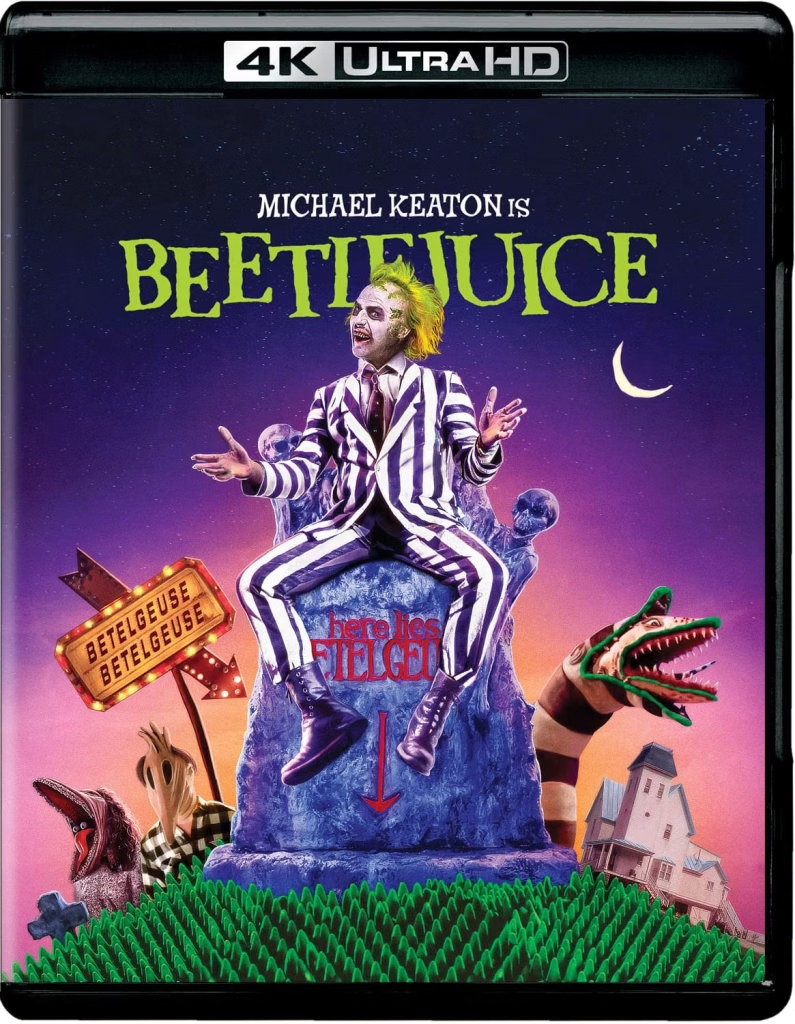
Tim Burton’s 1988 dark comedy Beetlejuice redefined Hollywood’s supernatural genre by flipping the traditional haunted-house narrative on its head. Instead of terrorizing the living, the story centers on the deceased, who find their domestic tranquility shattered by the obnoxious living humans moving into their home.

The Premise
Set in the idyllic fictional town of Winter River, Connecticut, newly deceased couple Adam (Alec Baldwin) and Barbara Maitland (Geena Davis) perish in a freak bridge accident. Trapped as ghosts within their Victorian country home, they discover the bureaucratic underworld outlined in the Handbook for the Recently Deceased.
Their afterlife is upended when the eccentric, wealthy Deetz family arrives from New York:
- Charles Deetz (Jeffrey Jones): A stressed-out real estate developer seeking peace.
- Delia Deetz (Catherine O’Hara): A self-absorbed, avant-garde sculptor determined to remodel the house into an aggressive postmodern art piece.
- Lydia Deetz (Winona Ryder): A brooding, goth teenager who feels alienated from her family and ends up befriending the Maitlands because she alone can see them.
Desperate to evict the Deetzes, the Maitlands summon Betelgeuse (Michael Keaton)—a crude, chaotic “bio-exorcist” who proves far more dangerous than the living pests they want gone.

Subverting the Ghost Story
Screenwriters Michael McDowell and Warren Skaaren transformed death from a grim tragedy into an absurd, bureaucratic inconvenience. The afterlife in Beetlejuice is not heaven or hell, but a literal civil service nightmare replete with smoke-filled waiting rooms, burned-out caseworkers (like Sylvia Sidney’s Juno), and endless red tape.
The film’s most iconic moment captures this inversion: rather than frightening the Deetzes with a classic haunting, the Maitlands possess dinner guests into performing a possessed, calypso-fueled rendition of Harry Belafonte’s “Day-O (The Banana Boat Song)”—which the trendy New Yorkers treat as avant-garde entertainment rather than terrifying menace.

Production and Burton’s Aesthetic
Coming off the surprise success of Pee-wee’s Big Adventure (1985), Burton applied his signature German Expressionist style to the horror genre:
- Practical Effects: Burton deliberately favored old-school techniques—stop-motion animation, puppetry, wires, and prosthetics—giving the underworld a tactile, carnival-like energy.
- Music: Composer Danny Elfman delivered a frantic, circus-gothic score that became a template for his lifelong collaboration with Burton.
- Keaton’s Performance: Michael Keaton spent less than 20 minutes on screen, yet his manic, ad-libbed, gravel-voiced performance anchored the entire cultural identity of the film.

Cultural Legacy and Franchise Impact
| Category | Key Milestones & Details |
|---|---|
| Box Office | Grossed over $74 million domestically on a modest $15 million budget |
| Accolades | Won the Academy Award for Best Makeup (Ve Neill, Steve La Porte, Robert Short) |
| Spin-offs | Animated TV series (1989–1991) running for 94 episodes |
| Broadway Adaptation | Opened in 2019, earning 8 Tony nominations and a massive cult following |
| Legacy Sequel | Beetlejuice Beetlejuice (2024), reuniting Burton, Keaton, Ryder, and O’Hara |
Beetlejuice remains one of the defining cultural touchstones of late-1980s American cinema, turning macabre sensibilities into mainstream comedy and launching Tim Burton into A-list auteur status.
To read the rest of my Monstrous Movie Reviews, click HERE! To add this movie to your film collection, click on the Blu-ray cover below.